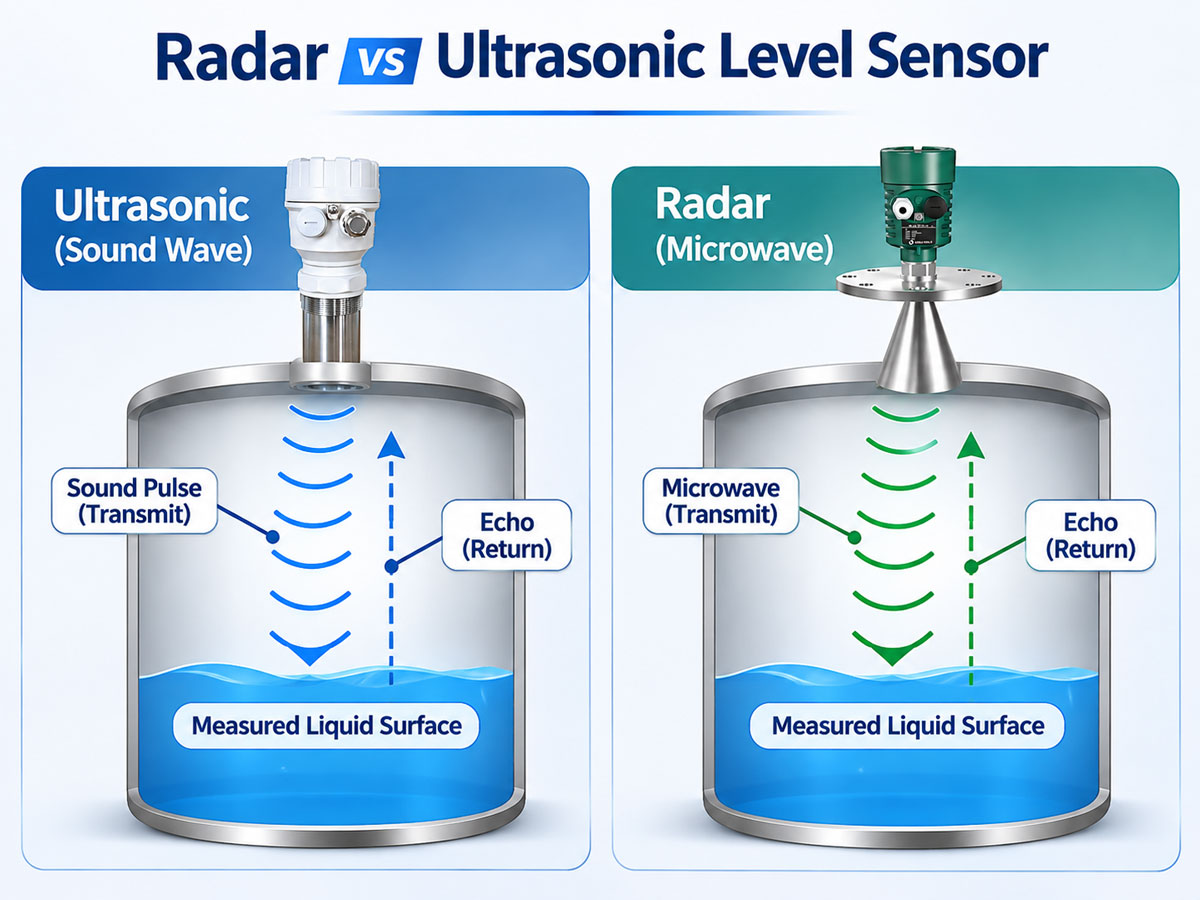
The main measurement difference is how each sensor works through the space above the liquid. Ultrasonic sensors use sound, so changes in gas composition or temperature can change sound speed and affect the calculated level. Radar uses microwaves and does not rely on sound speed. This can be an advantage when the gas conditions vary, but it does not remove the need to check the materials exposed to the tank atmosphere.
For acid service, the choice comes down to the actual gas conditions and the chemical compatibility of the selected instrument. Ultrasonic can be considered when the gas path is stable and its exposed materials are suitable. Radar is worth evaluating when changing gas conditions affect sound-based measurement. In either case, confirm the materials and process limits of the exact model before selection.
What Makes an Open Sump Difficult?
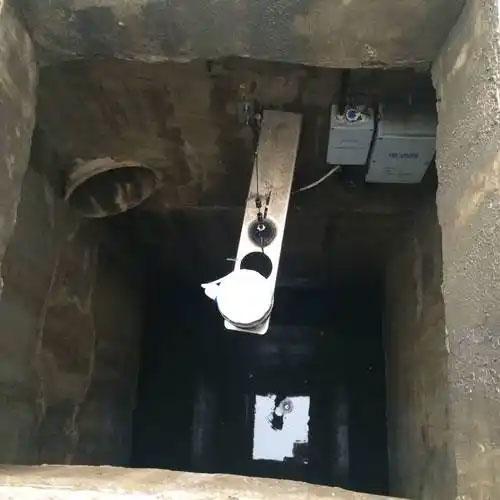
An open sump often presents a geometry and range problem. Measure the distance from the planned sensor face to both the lowest and highest liquid levels. The highest liquid level must remain outside the model’s blind zone, while the lowest level must remain within its measuring range.
The beam also needs a clear path. A ladder, wall, pipe, inlet stream or pump structure inside the beam can create a competing echo. Waves and splashing can make the surface return fluctuate. Compare the installation drawing with the pit layout and avoid mounting directly over an inlet or a structure that can reflect the signal.
If the required output is flow rate from an open channel, level alone is insufficient. The channel geometry or a weir/flume and a configured level-to-flow relationship are also needed.
For a calm, atmospheric water sump, such as a rainwater basin or wet well, the HL ultrasonic range may be a practical option when its measuring range, blanking distance and beam clearance fit. Across a mechanical screen, two ultrasonic sensors can measure the level difference: when the screen is clean, the levels on both sides are similar; when the screen becomes blocked, the upstream level rises. For wet-well service, also check the sensor face for condensation and dirt, which can change the echo over time.
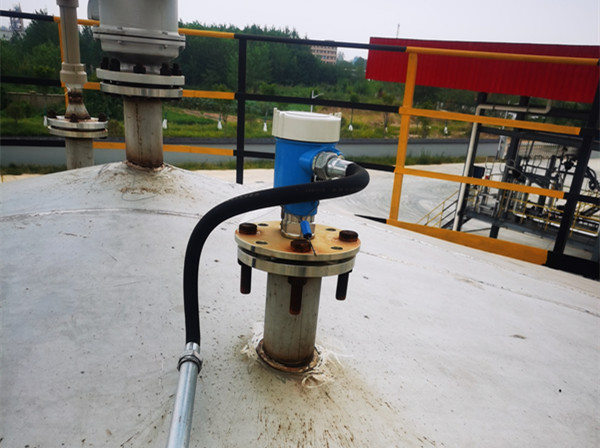
For a vessel with significant vapor or pressure, compare the exact radar model’s process limits and installation requirements instead of assuming that an open structure makes the application simple.
Which Specifications Matter When Choosing Radar or Ultrasonic?
Do not choose a level sensor by comparing maximum range or accuracy figures alone. Check the same operating level range, installation distance and process conditions for both technologies. The table below summarizes the main differences to review before selecting a model.
Selection point
Ultrasonic level sensor
Radar level sensor
Measurement signal
Uses sound pulses and calculates distance from echo travel time.
Uses microwave signals and calculates distance from the returned echo.
Gas above the liquid
Changes in gas temperature or composition can change sound speed and affect the reading.
Measurement does not depend on sound speed in the gas above the liquid.
Foam
Foam can absorb or scatter sound and weaken the echo from the liquid.
The echo may come from the foam surface or the liquid below it; foam can also weaken the signal.
Installation
Check sensor height, blanking distance and clear space along the sound path.
Check antenna position, nozzle, nearby structures and the path of the radar signal.
Process exposure
Check the sensing face, housing, seals and process connection for vapor or splash exposure.
Check the antenna, housing, seals, flange and process connection for vapor or splash exposure.
Model limits
Confirm measuring range, accuracy, temperature and pressure limits for the selected version.
Confirm measuring range, accuracy, temperature and pressure limits for the selected model.
For either technology, check the minimum and maximum liquid levels against the model's stated range and blanking distance. Also review the specified accuracy, process temperature and pressure limits, connection type and exposed materials. Published maximum range is not a guarantee that the sensor will measure reliably in every installation.
The most useful comparison is therefore not one radar model against one ultrasonic model in isolation. It is the performance of each suitable model under the same tank conditions, with the required measuring span and installation geometry clearly defined.
A Real Open-Tank Application
An open tank holding a sodium chloride solution needed level measurement at atmospheric pressure, with a maximum operating temperature of 55 °C. We supplied an ultrasonic level meter sized for a measuring range of up to 4 m to a system-integration customer.
The choice leaned toward ultrasonic for three reasons. The tank was open and atmospheric, the liquid surface provided a clear reflection for the ultrasonic pulse, and the 4 m measuring span fitted the HL 0–4 m version. Its 0.20 m blanking distance left most of the required range usable, while the 55 °C operating temperature was within the meter’s stated operating range.
What Information Should You Send for Model Selection?
Tell us about your tank or pit, and we will recommend a model. A short description is enough to get started. The more detail you include, the faster we can respond.
The following information is most useful:
What you are measuring, and the minimum and maximum levels.
Whether the tank is open or pressurized, and its operating temperature.
For foam: the foam condition, and whether you need the liquid surface or the top of the foam.
For an acid: the acid name, concentration, and normal and cleaning temperatures.
Any drawing or photo of the tank, including pipes, ladders or other obstructions.
Not sure about some of these details? Send what you have. Our engineers can ask follow-up questions to fill in the gaps.
Contact our engineers with these details, and we will reply within 24 hours with a recommended model code and quotation.
FAQ
Is radar always better than ultrasonic for foam?
No. Foam can weaken ultrasonic signals and radar signals. Lower-frequency radar is generally more suitable for thick, dense foam than high-frequency radar, but the result still depends on foam properties and the required measuring surface. Confirm the exact application before selecting a model.
Can an ultrasonic level meter measure through acid vapor?
Do not assume that it can. Vapor composition and changing conditions in the sound path can affect an ultrasonic echo, while acid vapor may also expose the sensor face and nearby materials. Review the actual vapor conditions and material compatibility against the selected model’s limits.
Does the sodium chloride tank application prove acid compatibility?
No. The supplied application involved sodium chloride solution under its recorded conditions. It does not establish compatibility with another chemical, concentration or temperature.
Can a level meter measure open-channel flow?
A level meter measures liquid height. To calculate flow, the installation also needs known channel geometry or a weir/flume and the corresponding level-to-flow relationship.
Is radar or ultrasonic better for wastewater treatment?
The choice depends on where the meter is installed. For a clean, calm wet well or rainwater basin, an ultrasonic meter is often the cost-effective choice when its range and blanking distance fit. For a foaming sludge digester or a tank with changing gas conditions, compare a radar model against the actual process conditions.